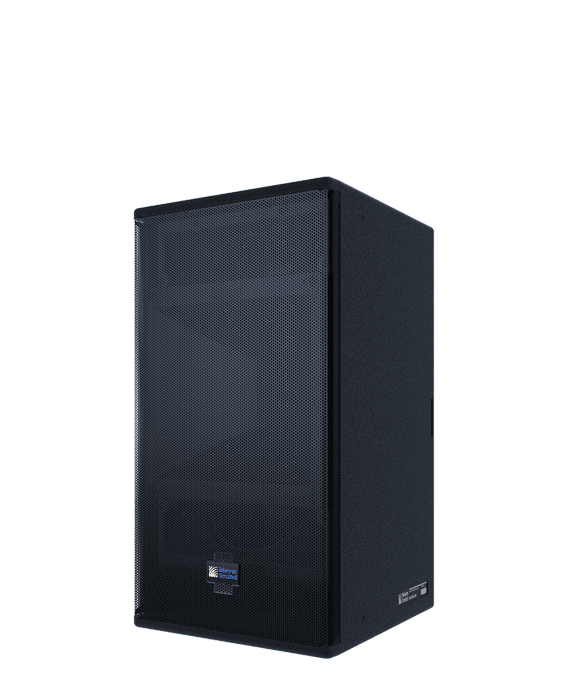
Zvučnik Meyer Sound ULTRA-X42 pruža snažno, kompaktno ozvučenje uz prepoznatljivu jasnoću i performanse karakteristične za Meyer Sound, sve u laganom i svestranom dizajnu. Idealan je za male i srednje prostore, live zvuk, AV prezentacije i instalacione primene. ULTRA-X42 se lako prilagođava različitim konfiguracijama, uz isporuku doslednog, visokofidelitetnog zvuka
ACOUSTICAL ULTRA-X40 ULTRA-X42 Operating Frequency Range 55 Hz – 19.5 kHz 55 Hz – 19.5 kHz Note: Recommended maximum operating frequency range. Response depends on loading conditions and room acoustics. Frequency Response 56 Hz – 19 kHz ±4 dB Note: Measured free field with 1/3 octave frequency resolution at 4 meters. 58 Hz – 18 kHz ±4 dB Note: Measured free field with 1/3 octave frequency resolution at 4 meters. Phase Response 90 Hz to 19.5 kHz ±45° 90 Hz to 19.5 kHz ±45° Linear Peak SPL 132.5 dB with 18 dB crest factor (M-noise), 130 dB (Pink Noise), 131 dB (B-noise) 134 dB with 18.5 dB crest factor (M-noise), 132 dB (Pink Noise), 134 dB (B-noise) Note: Linear Peak SPL is measured in free-field at 4 m referred to 1 m. Loudspeaker SPL compression measured with M-noise at the onset of limiting, 2-hour duration, and 50-degree C ambient temperature is < 2 dB. M-noise is a full bandwidth (10 Hz–22.5 kHz) test signal developed by Meyer Sound to better measure the loudspeaker’s music performance. It has a constant instantaneous peak level in octave bands, a crest factor that increases with frequency, and a full bandwidth Peak to RMS ratio of 18 dB. Pink noise is a full bandwidth test signal with Peak to RMS ratio of 12.5 dB. B-noise is a Meyer Sound test signal used to ensure measurements reflect system behavior when reproducing the most common input spectrum, and to verify there is still headroom over pink noise. Coverage Rotatable horn: 110° x 50° (at –6 dB) Rotatable horn: 70° x 50° (at –6 dB) TRANSDUCERS Low Frequency Two 8-inch cone drivers; 4 nominal impedance High Frequency One 3-inch diaphragm compression driver connected to a rotatable horn; 8 nominal impedance AUDIO INPUT Type Differential, electronically balanced Maximum Common Mode Range ±15 V DC, clamped to earth for voltage transient protection Connectors XLR 3-pin female input with male loop output; optional XLR 5-pin connector to accommodate both balanced audio and RMS signals. Input Impedance 10 k differential between pins 2 and 3 Wiring Pin 1: Chassis/earth through 1 k, 1000 pF, 15 V clamp network to provide virtual ground lift at audio frequencies Pin 2: Signal + Pin 3: Signal – (optional polarity reversal switch) Case: Earth ground and chassis Note: Pins 4 and 5 (RMS) only included with XLR 5-pin connector that accommodates both balanced audio and RMS signals. Nominal Input Sensitivity 0 dBV (1 V rms) continuous average is typically the onset of limiting for noise and music Input Level Audio source must be capable of producing +20 dBV (10 V rms) into 600 to produce maximum peak SPL over the operating bandwidth of the loudspeaker
AMPLIFIER Type Three-channel Class D Total Output Power 1950 W peak Note: Peak power based on the maximum unclipped peak voltage the amplifier will produce into the nominal load impedance. THD, IM TIM <.02% Cooling Convection AC POWER Connectors powerCON 20 input with loop output Automatic Voltage Selection 90–265 V AC, 50–60 Hz Safety Agency Rated Operating Voltage 100–240 V AC, 50–60 Hz Turn On/Turn Off Points 90 V AC turn-on, no turn-off; internal fuse protection above 265 V AC Current Draw Idle Current 0.27 A rms (115 V AC); 0.25 A rms (230 V AC); 0.29 A rms (100 V AC) Maximum Long-Term Continuous Current 1.9 A rms (115 V AC); 1.0 A rms (230 V AC); 2.2 A rms (100 V AC) Burst Current 3.1 A rms (115 V AC); 1.5 A rms (230 V AC); 3.4 A rms (100 V AC) Note: AC power cabling must be of sufficient gauge so that under burst current rms conditions, cable transmission losses do not cause the loudspeaker’s voltage to drop below the specified operating range. Maximum Instantaneous Peak Current 6.9 A peak (115 V AC); 3.4 A peak (230 V AC); 7.9 A peak (100 V AC) Inrush Current <20 A peak RMS NETWORK (OPTIONAL) Two-conductor twisted-pair network that reports all operating parameters of amplifiers to system operator’s host computer. PHYSICAL Dimensions W: 12.51 in (318 mm) x H: 22.31 in (567 mm) x D: 14 in (356 mm); D with handles: 15.38 in (391 mm) Weight 52 lb (23.6 kg) Enclosure Premium multi-ply birch with slightly textured black finish Protective Grille Powder-coated, round perforated steel Rigging 11 integrated M8 threaded points; 35 mm Pole Mount with M20 thread; optional accessories for various rigging options (see accessories section). ENVIRONMENTAL Operating Temperature 0 °C to +45 °C Non Operating Temperature –40 °C to +75 °C Humidity To 95% at 45 °C (non-condensing) Operating Altitude To 5,000 m (16,404 ft) Non Operating Altitude To 12,000 m (39,000 ft) Shock 30 g 11 msec half-sine on each of 6 sides Vibration 10 Hz – 55 Hz (0.010 m peak-to-peak excursion)

 Srpski
 English
 EU Countries